![Georgia Fair Offer [Sell My House Fast For Cash]](https://image-cdn.carrot.com/eyJidWNrZXQiOiJwcm9kdWN0aW9uLmNhcnJvdC11cGxvYWRzLm9uY2Fycm90LmNvbSIsImtleSI6InVwbG9hZHMvc2l0ZXMvNDg3MTYvMjAyNi8wMS9CdXktbXktaG91c2Uud2VicCIsImVkaXRzIjp7InJlc2l6ZSI6eyJ3aWR0aCI6NTAwLCJmaXQiOiJjb3ZlciJ9LCJ0b0Zvcm1hdCI6IndlYnAiLCJ3ZWJwIjp7InF1YWxpdHkiOjgwfX19)
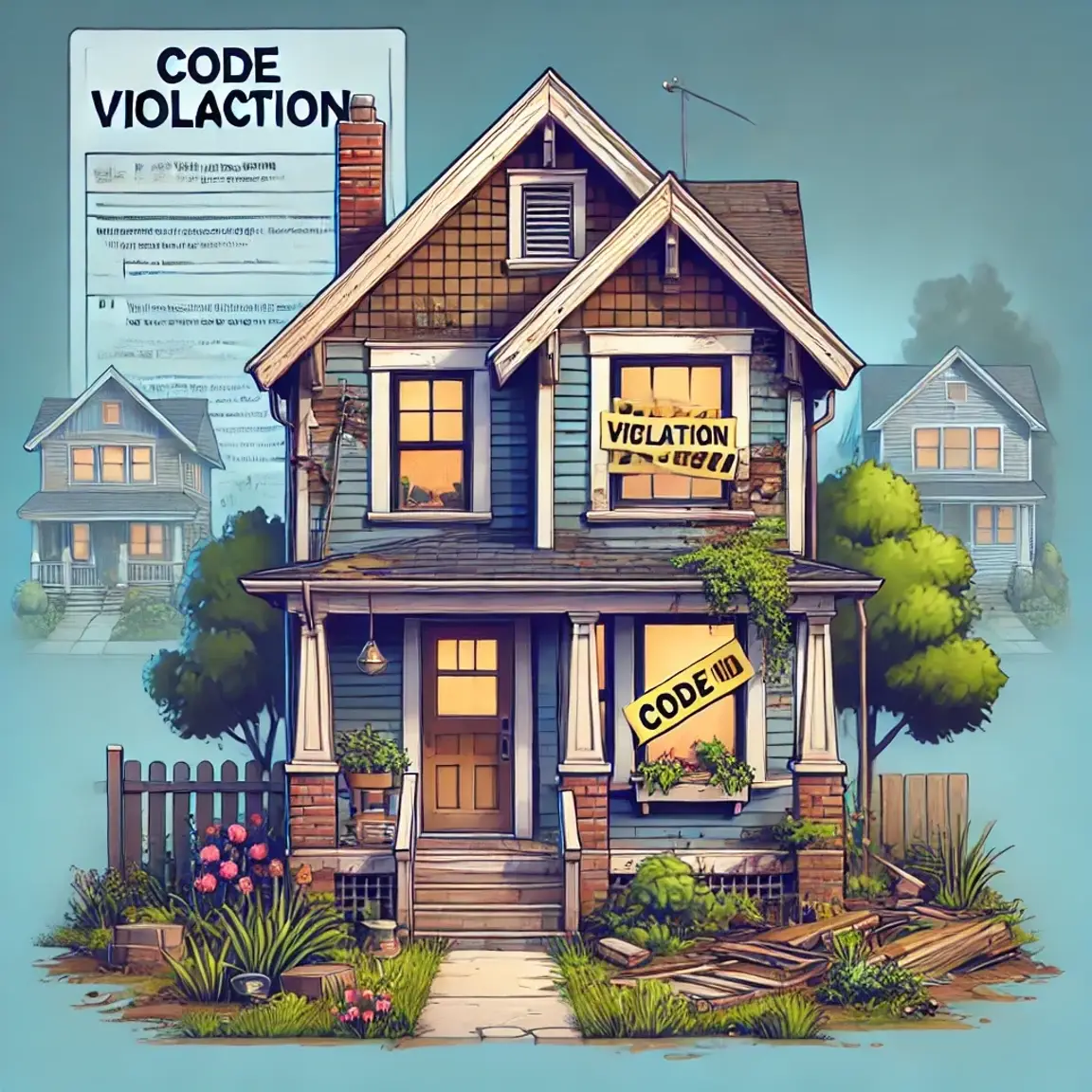
Yes — you can sell a house in Georgia even if it has code violations. But how you handle it affects your legal risk, your sale price, and how fast the deal closes. This guide covers what counts as a code violation in Georgia, what you’re actually required to tell buyers under Georgia law, and the real trade-offs between fixing problems, selling as-is, or selling to a cash buyer.
Get Your Fast Cash Offer Now!
We Buy Houses In ANY CONDITION! No Realtors, No Fees, No Repairs, No Cleaning. Find Out How Much Cash We Can Offer For Your House! 100% FREE, No Obligation!
What Counts as a Code Violation in Georgia
Building and safety codes exist to keep homes structurally sound and livable. When a property falls out of compliance, it can lose value and become harder to sell — but it doesn’t necessarily become unsellable. Here are the categories that come up most often:
Structural issues
- Cracked or shifting foundations
- Missing or damaged roofing that’s led to water intrusion or mold
- Sagging or unsafe decks, balconies, and stairs
Electrical and plumbing issues
- Outdated or damaged wiring (a leading cause of house fires)
- Improperly installed panels or outlets
- Leaking or non-compliant plumbing that’s caused water damage
- Poor venting that leads to sewer gas odors
Zoning violations
- Converting a single-family home into a duplex without approval
- Adding an ADU, room addition, or outbuilding without a permit
Environmental hazards
- Mold and mildew from poor ventilation or past water intrusion
- Asbestos, common in homes built before the 1980s
- Lead-based paint, a federally regulated concern in homes built before 1978
- Termite or pest damage
How Violations Get Reported and Enforced
Violations typically surface through routine inspections, neighbor complaints, or a buyer’s inspection during a sale. Once a local code enforcement officer identifies an issue, the property owner usually receives a correction notice with a deadline to fix it. Ignoring that notice can lead to fines, and in some counties, unpaid fines can turn into liens against the property — which will need to be resolved before the title can transfer at closing.
What Georgia Law Actually Requires You to Disclose
This is worth getting right, because it’s commonly misstated online: Georgia is a “caveat emptor” (buyer-beware) state. Unlike many states, Georgia does not have a statute requiring sellers to fill out a mandatory property disclosure form. The responsibility to inspect a property largely falls on the buyer.
That said, “no mandatory form” doesn’t mean “no obligation.” Georgia sellers still have a legal duty to disclose known material defects that wouldn’t be obvious from a reasonable inspection — this is sometimes called a “latent defect.” Courts have also held that a seller can’t lie if directly asked about a specific issue. Separately, federal law requires disclosure of known lead-based paint hazards on any home built before 1978, regardless of state disclosure rules.
In practice, this means:
- You are not legally required to complete Georgia’s voluntary Seller’s Property Disclosure Statement (a form published by the Georgia Association of REALTORS), but most agents will recommend it because it protects you if a dispute arises later.
- You are required to disclose known, hidden material defects — a hairline crack in visible drywall is different from a foundation issue you know about that isn’t visible.
- Concealing or lying about a known issue, as opposed to simply not volunteering it, is what typically exposes sellers to fraud claims, contract cancellation, or damages.
Because the line between “not required to disclose” and “must disclose” depends on the specific facts, this is genuinely a conversation to have with a Georgia real estate attorney before you list — not something to rely on a blog post (including this one) to determine for your specific situation.
How Serious Is the Violation? Assessing Impact
Not every violation affects a sale the same way.
Minor violations — peeling paint, outdated fixtures, small landscaping issues — are usually cosmetic. They may reduce your sale price slightly but rarely stop a sale outright.
Major violations — foundation cracks, unsafe wiring, roof failure, unpermitted additions, asbestos — are the ones that scare off traditional buyers, complicate financing (lenders often won’t approve a mortgage on a home with serious code issues), and carry real safety and liability exposure.
To get an accurate picture of where your property stands:
- Contact your local code enforcement office for a record of any open violations, correction notices, or fines on file.
- Hire a certified home inspector. Official records don’t always capture everything — an inspector can flag issues that haven’t been formally reported yet.
- Get repair estimates from licensed contractors for each issue, so you’re working with real numbers instead of guesses.
Your Three Main Paths: Repair, Sell As-Is, or Sell to a Cash Buyer
Option 1: Make the Repairs First
Pros: Can meaningfully increase resale value; opens the door to owner-occupant buyers (who make up the bulk of the traditional market and are far more likely to be scared off by visible issues); often leads to a faster traditional sale once listed.
Cons: Repairs require upfront cash you may not have; renovations often uncover additional problems once walls or floors are opened up, adding cost and time; you’re carrying the property (taxes, insurance, utilities) the entire time it’s being worked on.
Option 2: Sell As-Is on the Open Market
Pros: No repair costs; attracts investors and flippers who specifically look for fixer-uppers; can move faster than a full renovation-then-sell approach.
Cons: Buyers will factor repair costs into their offer, often more conservatively than the repairs actually cost; the buyer pool shrinks to primarily investors and cash buyers, since many lenders won’t finance homes with serious code issues; a buyer’s inspection can still reveal problems that lead to renegotiation or a canceled contract.
Option 3: Sell Directly to a Cash Home Buyer
Pros: Closings can happen in as little as 7–14 days since there’s no financing contingency; no repairs, cleaning, or staging required; fewer opportunities for a deal to fall through during an inspection period, since reputable cash buyers price in the property’s condition upfront rather than renegotiating after inspection.
Cons: The trade-off for speed and certainty is typically a lower price than you’d get from a fully repaired home sold to an owner-occupant on the open market. This route makes the most sense when speed, certainty, or avoiding repair costs matters more to you than maximizing top-dollar sale price.
Georgia Fair Offer buys homes as-is, including properties with open code violations, structural issues, or unpermitted work. We handle the closing timeline around your situation and don’t require repairs, showings, or agent commissions.
Pricing a Home With Known Violations
If you’re selling as-is (whether on the open market or to a direct buyer), price it realistically:
- Look at recently sold comparable properties in similar condition — not just similar square footage — in your area.
- Subtract a reasonable estimate of repair costs from the comparable value. If similar homes in good condition sell for $250,000 and your repair estimates total $30,000, pricing near $220,000 is a more realistic starting point than pricing at $250,000 and hoping no one notices the issues.
- Be open to negotiating repair credits at closing rather than holding firm on price — this often gets deals done faster than an inflexible number.
Avoiding Future Code Violations
If you’re not selling immediately, staying ahead of violations protects your property’s value:
- Handle routine maintenance (roof, gutters, minor leaks) before small issues become expensive ones.
- Check with your specific city or county before starting any renovation or addition — permit and zoning rules vary block to block in some parts of Metro Atlanta.
- Use licensed contractors for any electrical, plumbing, or structural work, so the work itself doesn’t create a new violation.
A Note From Kelly
I’ve spent the last 20+ years on the other side of this problem — first in residential construction and property restoration, then running multimillion-dollar renovation projects, and now buying houses directly from Georgia homeowners. In that time I’ve probably walked through a few hundred homes with open code violations, and a few patterns show up over and over.
The violation that costs sellers the most money isn’t usually the one that looks the worst. A cracked foundation looks terrifying, but it’s often a known, quotable repair. What actually kills deals is unpermitted work — a finished basement, an added bedroom, a converted garage — because a lender’s appraiser or a buyer’s attorney can’t easily tell what’s structurally sound and what isn’t, so financing falls apart at the worst possible moment, usually a week before closing.
If I’m advising a homeowner in this situation, my honest first question is always: how much time and cash do you actually have? If you have both, prioritizing the two or three violations that affect safety or financing — not the cosmetic stuff — usually gets you the best return for the least spend. If you don’t have the time or cash to carry a renovation, that’s a real answer too, and it’s the situation we built this company to solve.
Frequently Asked Questions
Can I sell my Georgia home without fixing code violations?
Yes. Georgia doesn’t require you to fix known violations before selling, but you do need to disclose known material defects that a buyer wouldn’t discover through a reasonable inspection. Concealing or lying about a known issue is what creates legal risk — not the violation itself.
How much do code violations affect home value?
It depends on severity. Cosmetic issues (outdated fixtures, peeling paint) have minimal impact. Structural or safety issues — a foundation problem, for example — can reduce value by 20% or more compared to a similar home in good condition, largely because they narrow your buyer pool to cash buyers and investors.
What happens if I don’t disclose a known violation?
If it’s a known, hidden material defect, failing to disclose it — or lying if directly asked — can expose you to a fraud claim, a canceled contract, or a damages lawsuit if the buyer discovers it after closing.
Does Georgia require a seller disclosure form?
No. Georgia is a caveat emptor state and has no statutory requirement for a disclosure form. Most agents still recommend using the Georgia Association of REALTORS voluntary disclosure statement, since it creates a paper trail that protects you if a dispute comes up later.
Can I sell a house as-is with code violations in Atlanta?
Yes. You can list it as-is on the MLS with an agent, or sell it directly to a cash home buyer without making repairs first.
What role does a real estate agent play if my house has violations?
An experienced agent can help you price the property accurately, market it to the right buyer pool (investors vs. owner-occupants), and navigate what does and doesn’t need to be disclosed.
Should I talk to a real estate attorney before selling?
Yes, especially if the violations are significant. Because Georgia’s disclosure rules depend heavily on the specific facts of what you know and when you knew it, an attorney can tell you where you stand — this article is general information, not legal advice for your situation.
Bottom Line
You can sell a house with code violations in Georgia — the question is which path fits your timeline and finances. Repairing first can maximize your sale price if you have the time and capital. Selling as-is opens the door to investors and cash buyers without the upfront cost. Either way, disclose what you’re legally required to disclose, and talk to a real estate attorney if you’re unsure where a specific issue falls. If you’d rather skip repairs and showings altogether, Georgia Fair Offer buys homes as-is throughout Metro Atlanta and can typically close in 7–14 days.
Get Your Fast Cash Offer Now!
We Buy Houses In ANY CONDITION! No Realtors, No Fees, No Repairs, No Cleaning. Find Out How Much Cash We Can Offer For Your House! 100% FREE, No Obligation!